

THE HAKKA JOURNAL
Best Barbecue Smoker Accessories for Pro Pits
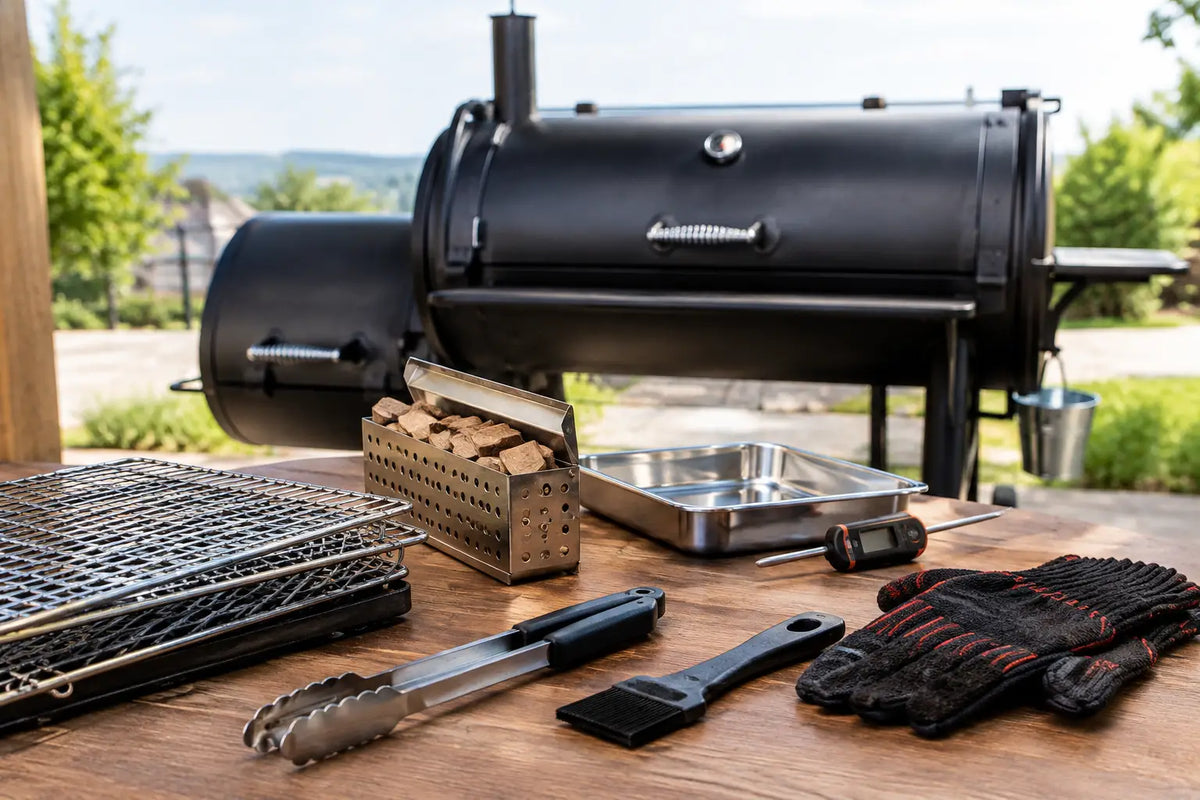
A smoker can produce exceptional brisket, ribs, poultry, and sausage, but the best barbecue smoker accessories are what keep that production consistent through a full service. For a restaurant, caterer, butcher shop, or BBQ operation, accessories are not decorative add-ons. They protect product quality, reduce unnecessary labor, improve safety, and help the pit run on schedule.
The right selection depends on smoker type, daily volume, menu mix, and available labor. A small operation may need better monitoring and handling tools first. A high-volume pit room may gain more from extra rack capacity, hot holding support, and cleaning equipment. Buy for the point where your workflow breaks down, not for the longest possible accessory list.
Best Barbecue Smoker Accessories for Temperature Control
Temperature management is the first priority because smoked meat quality depends on repeatable heat, not guesswork. The smoker's built-in gauge is useful, but it only shows the temperature at one location. It cannot tell a pitmaster whether the grate near the firebox is running hotter than the far end, whether a large brisket is approaching its finish temperature, or whether a door opening caused a meaningful heat drop.
Digital probe thermometers
A commercial-ready digital thermometer with multiple probes gives operators visibility into both chamber and product temperatures. Use one probe at grate level near the cooking zone and another in the thickest part of the product. For large cuts, multiple meat probes can reveal differences between briskets loaded on separate shelves or between the point and flat of a single packer.
Look for probes built to handle repeated use, readable displays, and leads long enough to keep the control unit outside the hot chamber. Accuracy matters, but durability and recovery time matter too. In a working kitchen, a fragile consumer thermometer that fails during a busy weekend is not a practical solution.
Independent oven thermometers
Simple analog oven thermometers remain useful as a backup and as a way to map a smoker's hot and cool zones. Place them at different rack positions during a test cook. The information helps staff decide where to load delicate items, where to position large cuts, and when racks should be rotated.
This accessory is inexpensive, but its value is operational. A pit that varies by 30 degrees from side to side can still produce consistent food when the team understands its behavior.
Temperature controllers
For compatible charcoal, wood-fired, or gravity-fed smokers, a digital fan controller can stabilize airflow and reduce the labor required to manage a long cook. It is particularly useful for overnight brisket production, large catering orders, and operations where one cook is responsible for multiple stations.
A controller does not replace a trained operator. Fuel condition, fire management, door seals, and exhaust settings still affect results. It does, however, reduce temperature swings and provide a more controlled baseline during long production cycles.
Accessories That Improve Loading, Capacity, and Product Handling
A smoker is only productive when it can be loaded safely, unloaded quickly, and cleaned between batches. The best accessories in this category reduce handling damage and keep hot product moving without improvisation.
Extra racks and rack supports
Additional stainless steel racks are among the most useful purchases for high-volume smoking. They allow an operator to run different products in separate zones, stage racks before loading, and replace a dirty rack without stopping production. Select racks that match the smoker's interior dimensions and support weight without flexing.
Rack spacing deserves as much attention as total capacity. Crowding blocks airflow, slows bark development, and creates uneven cooking. It is often more profitable to add a compatible rack system or a larger holding solution than to overload every shelf in the smoker.
Rib racks, sausage hooks, and hanging systems
Vertical rib racks increase capacity when ribs are a core menu item, but they work best when there is enough airflow around each slab. Cheap, tightly spaced racks may raise the count while producing pale, uneven ribs. Choose heavy-gauge construction that can be cleaned thoroughly and will not deform under repeated heat cycles.
Hooks and hanging bars are useful for sausage, poultry, and specialty cuts. They create even exposure to smoke and free up grate space, but they require reliable clearance and safe loading procedures. Verify the smoker's ceiling height and the weight rating of the hanging system before building a production plan around it.
Sheet pans, drip pans, and hotel pans
Drip management is a food quality and sanitation issue. Heavy-duty drip pans catch rendered fat before it burns, reduces flare-ups in applicable units, and makes cleanup faster. Full-size and half-size hotel pans also help stage wrapped briskets, collect juices, and move cooked product to a holding cabinet or prep station.
Avoid using shallow, lightweight pans for heavy grease loads. A warped or overflowing pan creates a burn hazard and adds avoidable cleanup to the end of service.
Airflow, Fuel, and Smoke Management Tools
Clean smoke comes from controlled combustion. Accessories cannot correct wet wood, poor ventilation, or an undersized smoker, but they can make fuel handling more organized and repeatable.
A covered fuel bin keeps wood chunks, pellets, charcoal, and fire starters dry and separated from prep areas. For operations using multiple wood varieties, labeled bins prevent accidental mixing and make it easier to reproduce the intended smoke profile. A sturdy ash shovel and metal ash container are equally important for safe firebox maintenance.
Heat-resistant gloves, long tongs, and a fire poker should be assigned to the smoker station rather than borrowed from general kitchen use. Select gloves rated for high heat with enough dexterity to reposition grates and pans. Oversized gloves protect hands but can make precise handling difficult, so the right fit matters.
For wood-fired equipment, a small moisture meter can be useful when fuel quality is inconsistent. This is not essential for every operation, but wet wood creates dirty smoke, unstable heat, and bitter product. If fuel is stored outdoors or received from varied suppliers, the tool can help identify a preventable quality problem.
Holding and Transport Accessories Protect the Finished Product
Smoking is only part of the process. Meat can lose quality after it leaves the pit if it is held at the wrong temperature, exposed to air, or carried in unstable containers.
Insulated food carriers and commercial hot holding cabinets help maintain safe serving temperatures during catering, off-site events, and rush periods. The correct choice depends on holding time and production volume. An insulated carrier works well for short transport, while a heated holding cabinet provides better control for extended service.
Wire cooling racks, sheet pans, and food-safe cutting boards also support the transition from smoker to slicing station. Resting brisket on a raised rack prevents the bottom from steaming in pooled juices. For pulled pork and ribs, durable pans with fitted lids keep product organized during batch service.
Use labeled probe-safe containers or cambro-style pans to separate raw product, cooked product, and rested product. The accessory itself is simple, but the system prevents cross-contamination and makes handoffs easier when several employees work the same pit.
Cleaning and Safety Equipment Is Not Optional
Grease, ash, carbon buildup, and worn brushes reduce smoker performance over time. A dedicated cleaning kit should include a stiff grill brush appropriate for the grate material, scraper, non-abrasive pads, foodservice-safe degreaser, and disposable towels. Use tools that reach corners, drain channels, and the underside of racks where residue accumulates.
Do not rely on loose wire brushes that can shed bristles onto cooking surfaces. A scraper or coil-style brush is often a safer choice, especially in commercial environments where equipment receives frequent use. Keep a small inspection light nearby for checking seals, drain paths, and interior buildup before the next cook.
Fire extinguishers, burn supplies, and clear heat-zone procedures are also part of the accessory plan. They do not increase capacity, but they protect staff and reduce the chance that a small grease or ash issue becomes a costly interruption.
How to Prioritize Your Purchase
Start with tools that measure temperatures accurately and allow safe handling of hot racks and meat. Next, add capacity accessories that match your actual menu, followed by holding, transport, and cleaning equipment. This order produces better results than buying specialty racks or novelty tools before the core workflow is under control.
For growing BBQ businesses, Hakka Brothers approaches equipment selection as a production decision: specify the smoker, identify the bottleneck, and add commercial-grade tools that improve output without creating more steps. A well-equipped pit station should make the next batch easier to run than the last one.
The most valuable accessory is the one your crew uses every day without slowing down. Choose durable tools sized for your smoker and service volume, then build a station where clean heat, safe handling, and consistent finished meat are routine.
Keep exploring
All guides ↗
How to Reduce Prep Bottlenecks in Busy Kitchens
Reduce prep bottlenecks with workflow design, right-sized equipment, cold storage, and station planning that keep commercial kitchens producing daily.
Read the guide
Salad Spinner Not Drying Lettuce? Check Your Batch
Troubleshoot unevenly wet greens with practical loading, drainage and workflow checks, plus a fact-based comparison of Clivia 10 Qt and 20 Qt manual spinners.
Read the guide
Buffet Drink Station Setup: Cups, Clearance and Refills
Plan a buffet drink station around cup clearance, guest flow and refill access, with practical checks for Hakka 3-gallon and 5-gallon dispensers.
Read the guide
Join the conversation