

THE HAKKA JOURNAL
Salad Spinner Not Drying Lettuce? Check Your Batch
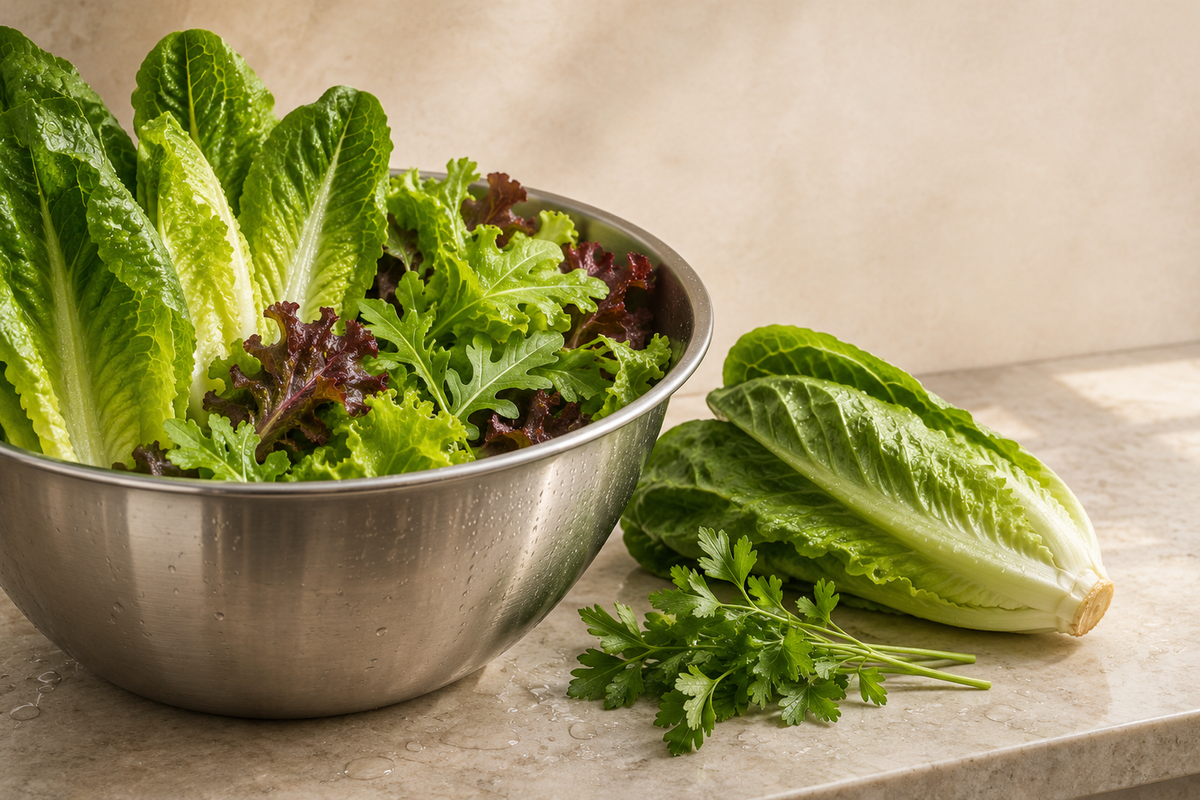
A salad spinner not drying lettuce evenly does not always call for a larger machine. Before changing equipment, look at the batch: how tightly the leaves are loaded, whether different ingredients are mixed together, and where the removed water goes. These checks help you make a more useful decision than judging the spinner by basket size alone.
This guide focuses on a practical prep check. For a broader overview of equipment selection, see our commercial salad spinner buying guide.
Salad spinner not drying lettuce? Check loading first
A basket's stated volume describes a size; it does not tell you how tightly to pack a particular ingredient. Whole romaine leaves, loose mixed greens, and bunches of herbs occupy space differently. The current Clivia listings recommend loose loading, avoiding overfilling, and smaller batches for heavy or very wet produce.
If a batch comes out unevenly wet, stop the basket completely before opening the unit. For the next batch, reduce the quantity and distribute the leaves loosely, following the model's instructions. Compare that result with your previous batch before deciding that the capacity is inadequate. Do not force the handle if the mechanism resists normal operation.

Separate delicate herbs from larger leaves
Large leaves and small herbs create different handling tasks. Planning them separately lets staff choose a manageable amount for each batch and inspect the result more easily. It also makes it clearer which ingredient is causing a repeat problem. This is a prep-planning approach, not a fixed weight or fill-height recommendation.
Check assembly and the water-removal route
Before another cycle, confirm that the basket and lid are positioned as described in the instructions. Check where water collects and how the unit is intended to drain. A clear destination for removed water belongs in the station layout, alongside access to the handle and room to lift out the basket.
The Clivia 20 Qt listing specifies a built-in drainage pipe and a manual brake. Follow that model's instructions for using those features. For another model, confirm its own drainage and stopping arrangements rather than copying a procedure because the two units look similar.
If the lid will not seat normally, the crank jams, or a component appears damaged, stop using the unit and check the supplied guidance or contact us with the model number. Extra force and improvised repairs are not a substitute for resolving an assembly or mechanical problem.
What the Clivia 10 Qt and 20 Qt listings actually tell you
Both models below are currently listed in our store as manual salad spinners. Their capacities help narrow the options, while the rest of your decision depends on the space and routine around them.
| Model | Listed capacity | Details to consider |
|---|---|---|
| JW-SP9.5 | 2.5 Gal / 10 Qt | Manual hand-crank operation; check fit and handling for your planned batches. |
| JW-SP19 | 5 Gal / 20 Qt | Manual operation, built-in drainage pipe, and manual brake, as listed for this model. |
The 20 Qt designation is not a promise of twice the output of a 10 Qt model. Washing, loading, unloading, and moving the greens all take time. If those steps are the bottleneck, a bigger basket may leave the overall routine unchanged. Record the full task sequence before choosing a replacement.

A prep checklist for wet greens
- Identify the model. Keep its operating instructions available and confirm the basket, lid, and handle arrangement.
- Review the ingredient. Note whether the problem occurs with large leaves, mixed greens, or herbs.
- Reduce a crowded batch. Load loosely within the manufacturer's guidance rather than compressing produce into the basket.
- Check water removal. Use the drainage method specified for the unit and keep the surrounding workspace clear.
- Inspect after stopping. Wait until the basket has stopped before opening, unloading, or adjusting the contents.
- Review the whole routine. Include washing, loading, drying, transfer, cleaning, and storage when deciding where time is being lost.
After use, clean the equipment according to its instructions. Avoid assuming that every lid, drive component, or basket has the same cleaning requirements. Keep a clear transfer area so the next batch does not have to wait while staff search for a suitable container.
Frequently asked questions
How long should I spin lettuce?
There is no single duration we can promise for every ingredient and batch. Follow the operating instructions for your model, use a manageable load, and inspect the greens once the basket has fully stopped. Avoid treating an advertised capacity as a drying-time specification.
Does a 20 Qt spinner hold a fixed number of lettuce heads?
No fixed head count is stated in the Clivia listings used here. Head size, leaf shape, preparation, and packing density vary. Plan around loosely loaded batches instead of converting quarts into an assumed number of heads or pounds.
Should I buy a bigger spinner if greens are still wet?
First check loading, assembly, and drainage. If the current unit works with smaller batches but your team must repeat too many cycles, compare the larger model's dimensions and handling with your available space. A capacity change should address an observed workflow need.
Does spinning replace washing or the rest of our handling routine?
A spinner removes excess surface water from washed produce. Continue following your established preparation, cleaning, and storage procedures; drying is one step in that routine.
Review the current Clivia 10 Qt manual salad spinner and Clivia 20 Qt spinner with brake and drain specifications before deciding which fits your prep station.
Keep exploring
All guides ↗
How to Reduce Prep Bottlenecks in Busy Kitchens
Reduce prep bottlenecks with workflow design, right-sized equipment, cold storage, and station planning that keep commercial kitchens producing daily.
Read the guide
Buffet Drink Station Setup: Cups, Clearance and Refills
Plan a buffet drink station around cup clearance, guest flow and refill access, with practical checks for Hakka 3-gallon and 5-gallon dispensers.
Read the guide
Commercial Dishwashing Equipment Guide for Restaurants
This commercial dishwashing equipment guide helps restaurants match machine type, capacity, utilities, and sanitation needs to faster, cleaner service.
Read the guide
Join the conversation