

THE HAKKA JOURNAL
Buffet Drink Station Setup: Cups, Clearance and Refills
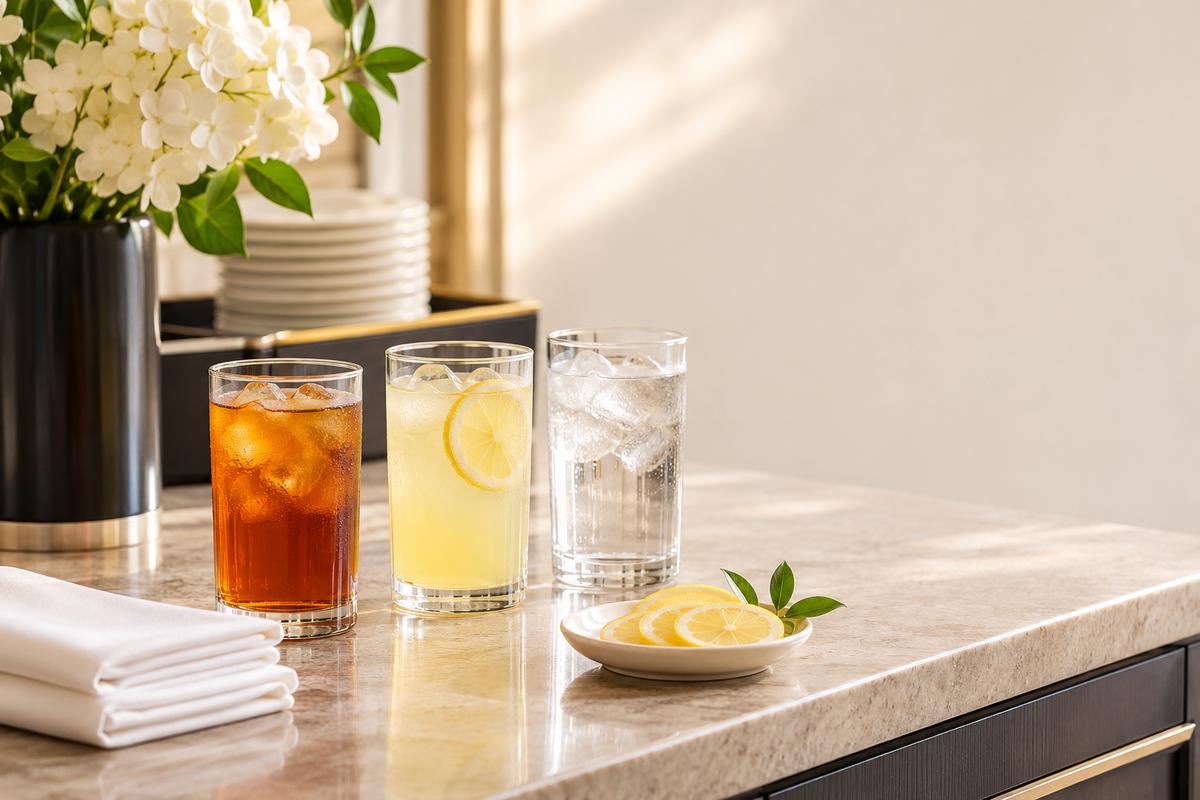
A buffet drink station setup should make three actions obvious: pick up a cup, pour a drink, and move away without crossing the next guest's path. Start with that sequence before choosing a larger beverage dispenser. Capacity matters, but cup clearance, refill access, and counter space determine whether the equipment fits the way you serve.
Build a buffet drink station around the guest's route
Place cups where guests encounter them before reaching the tap. Position napkins and any lids after the pouring area so one person can finish while the next starts. Leave a clear landing space for a filled cup; a crowded counter encourages people to reach across each other.
Keep the whole dispenser supported on a stable, level surface. Do not move its base toward an edge just to fit a taller cup beneath the outlet. Instead, choose equipment and serving cups that work together on the intended counter.
Match dispenser capacity to your refill plan
The Hakka BD11L 3-gallon beverage dispenser and Hakka BD19L 5-gallon beverage dispenser offer two capacity options for a station serving iced tea, punch, or other suitable beverages. Compare the amount you intend to prepare with the space and handling involved in refilling.

A smaller dispenser can be practical when staff can replenish it between waves of guests. A larger dispenser may reduce the number of refills, but it also needs an appropriate support surface and a workable loading routine. Avoid choosing capacity from the total guest count alone: a short breakfast window and a long reception can create very different refill schedules.
| Planning question | What to check |
|---|---|
| How much will you serve? | Estimate portions per drink, rather than assigning every guest a full serving of every flavor. |
| When can you refill? | Identify a staff member and an access route that does not cut through the guest queue. |
| How much counter space is available? | Include cups, the serving area, drip management, and any adjacent equipment. |
Use portion math as a planning example
For example, 30 portions at 8 fluid ounces require 240 fluid ounces of beverage, or 1.875 US gallons. That is arithmetic for planning a batch, not a guaranteed serving count for a particular dispenser. Ice, the chosen portion, product instructions, and the way guests pour can change the amount you actually serve.
Check cup height, lid access, and the drip area
Bring the cups you actually use to the setup check. A nominal cup volume does not tell you its height or shape. Place the tallest cup under the outlet and check that a guest can position it, operate the tap, and remove the filled cup without awkward tilting.

The BD11L listing identifies an integrated drip tray and a wide-mouth opening. Allow room to reach and clean those areas. For any model, check the actual tray arrangement and cup clearance rather than assuming that another dispenser's accessories or dimensions apply.
Leave room above the lid for opening and refilling. A dispenser can fit beneath a shelf while still being difficult to service there. Measure the complete station with its planned accessories before committing to a location.
Make refill and cleanup access part of the layout
Plan how staff will bring replacement beverage to the station, where preparation containers will sit briefly, and how removable parts will reach the cleaning area. Keep reserve supplies off the guest's pouring space. Follow the specific product instructions for assembly, cleaning, and suitable beverages.
Container capacity or material temperature ratings do not, on their own, establish a beverage's holding conditions. Choose the drink menu and temperature-management arrangement together. For a broader equipment comparison, read our commercial juicer dispenser guide.
Buffet drink station setup checklist
- Confirm the exact dispenser model and its current product specifications.
- Check the support surface with the planned equipment and beverage load.
- Test the tallest serving cup beneath the outlet.
- Leave room for lids, refilling, drip management, and cleaning access.
- Arrange cups before the tap and finishing supplies afterward.
- Assign refill responsibilities and keep reserve supplies out of the guest route.
- Run a short service rehearsal with the actual cups and station layout.
Frequently asked questions
Should a buffet use a 3-gallon or 5-gallon dispenser?
Choose around beverage demand per flavor, refill opportunities, available counter space, and handling. The BD11L and BD19L product pages list the respective 3-gallon and 5-gallon options; check their current specifications before ordering.
Will a larger dispenser automatically shorten the queue?
It changes capacity, not the entire serving route. Cups placed behind the tap, restricted access, or a crowded finishing area can still cause delays. Check the layout before solving a workflow issue with a larger tank.
Can I determine cup clearance from the dispenser's overall height?
No. Overall height and the usable space beneath the outlet are different measurements. Check your serving cup against the actual outlet and tray arrangement.
Where should I start when space is tight?
Lay out the full station using your actual cups, napkins, lids, and dispenser footprint. Then decide whether one drink choice, a smaller batch, or a different location creates a more workable route.
Compare the current BD11L 3-gallon and BD19L 5-gallon listings to choose a dispenser that fits your service plan.
Keep exploring
All guides ↗
How to Reduce Prep Bottlenecks in Busy Kitchens
Reduce prep bottlenecks with workflow design, right-sized equipment, cold storage, and station planning that keep commercial kitchens producing daily.
Read the guide
Salad Spinner Not Drying Lettuce? Check Your Batch
Troubleshoot unevenly wet greens with practical loading, drainage and workflow checks, plus a fact-based comparison of Clivia 10 Qt and 20 Qt manual spinners.
Read the guide
Commercial Dishwashing Equipment Guide for Restaurants
This commercial dishwashing equipment guide helps restaurants match machine type, capacity, utilities, and sanitation needs to faster, cleaner service.
Read the guide
Join the conversation