

THE HAKKA JOURNAL
Chest Freezer Versus Upright Freezer for Business
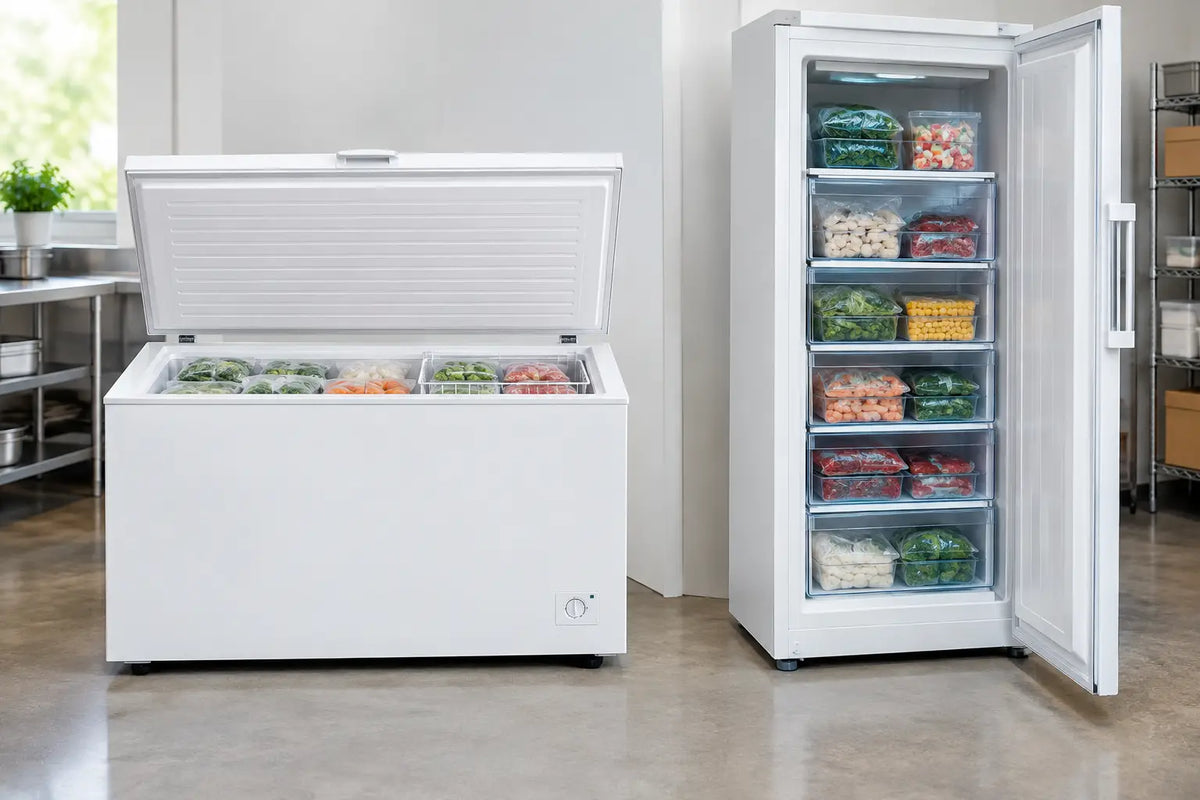
A freezer that forces cooks to dig through frozen product during a busy service is not saving space or money. In the chest freezer versus upright freezer decision, the better choice depends less on appearance and more on how your operation receives, stores, rotates, and pulls inventory. Restaurants, butcher shops, caterers, BBQ operations, and bakeries need storage that protects product quality while keeping labor practical.
Both freezer styles can support commercial food storage, but they perform differently on floor space, organization, temperature recovery, and day-to-day access. A chest freezer is built for high-volume, long-term holding. An upright freezer is built for visibility and fast product retrieval. The right unit should support the workflow around it, not create another bottleneck in the back of house.
Chest Freezer Versus Upright Freezer: Start With Workflow
The first question is simple: how often will employees open the freezer, and what do they need to find when they do?
A chest freezer stores product horizontally under a top-opening lid. It works especially well for boxed proteins, bulk ingredients, vacuum-sealed meats, frozen seafood, and prepared batches that will stay in storage for days or weeks. Because cold air naturally stays low when the lid opens, chest models generally lose less cold air during access. That makes them a strong option for bulk reserve inventory and operations that buy in volume.
An upright freezer stores product on shelves behind one or more front-opening doors. It gives employees a direct view of inventory, which is valuable when a cook needs a specific case of fries, portioned chicken, frozen dough, or dessert components quickly. The trade-off is that opening a vertical door releases more cold air, and frequent access can make the refrigeration system work harder to recover temperature.
For a busy line or prep station where staff pull product throughout the day, an upright is usually easier to manage. For a butcher operation storing cases of trim, ground meat, bones, or vacuum-packed cuts for later production, a chest freezer often delivers better bulk-storage efficiency.
Capacity Is More Than Cubic Feet
A larger cubic-foot rating does not automatically mean more usable storage. The shape of the cabinet changes how product fits and how much labor it takes to manage.
Chest freezers typically provide more usable capacity for their footprint because there are fewer shelves, interior partitions, and door-clearance demands. Large cartons and irregularly shaped bags fit easily. That is useful for whole cases of meat, bulk sausage ingredients, frozen vegetables, poultry, or ice packs for transport operations.
The drawback is depth. Product at the bottom can become forgotten inventory if the freezer is not organized with baskets, dividers, labels, and a strict first-in, first-out process. A chest freezer can hold a great deal, but it can also hide costly product beneath newer deliveries.
Upright freezers use shelving to turn vertical height into organized storage zones. Assigning shelves by category, date, or station makes inventory checks faster and helps employees follow rotation procedures. This layout can reduce wasted time and product loss, particularly in kitchens with multiple shifts or less experienced staff.
When comparing capacity, measure your actual product format. A bakery may need shelf space for trays or boxed dough. A BBQ operator may need room for stacked vacuum-sealed brisket and ribs. A food processor may need open floor capacity for heavy cartons rather than narrow shelves. Match the cabinet interior to the products that will live inside it.
Floor Space and Placement Requirements
Chest freezers consume more floor area because the lid needs clear space to open upward. They are low and wide, so they fit best along a wall in a storage room, receiving area, commissary, or production space with enough clearance above the unit. Do not place shelving, low-hanging racks, or other equipment where it prevents the lid from opening fully.
Upright freezers have a smaller floor footprint but require door-swing clearance in front. Their vertical design makes them a practical choice in tight back rooms where wall space is available but floor space is limited. They can also be easier to place near prep areas, provided the surrounding environment allows for proper ventilation and door operation.
Weight and loading access matter as well. A fully loaded commercial freezer is not something you want to relocate after installation. Before ordering, verify door widths, delivery routes, electrical requirements, ventilation clearances, and the final placement location. For chest units, confirm that staff can safely reach the bottom without climbing, overreaching, or moving heavy product by hand from an awkward position.
Energy Use and Temperature Stability
Chest freezers have a natural advantage in energy retention. Cold air is dense and settles, so it remains in the cabinet when a top-opening lid is raised. The compressor does not have to recover from as much warm-air intrusion after each opening. For reserve inventory that is accessed periodically, this can support efficient operation and stable frozen storage.
Upright freezers can still be highly effective, especially models with quality door gaskets, insulated cabinets, self-closing doors, and reliable temperature controls. But their energy performance is more sensitive to behavior. A door left open during stocking, repeated browsing for product, or damaged gaskets can increase temperature fluctuations and operating cost.
Neither format excuses poor temperature management. Use a calibrated thermometer or built-in digital display to verify the cabinet is holding its intended set point. Keep condenser areas clean, avoid overloading air paths, inspect gaskets regularly, and do not load large volumes of warm product into a freezer that is already working at capacity. Frozen storage protects quality only when the unit can maintain consistent conditions.
Organization and Inventory Control
An upright freezer wins on visibility. Shelves make it easier to label zones for proteins, prepared foods, desserts, dough, vegetables, or station-specific inventory. Employees can spot low stock without unloading the cabinet. This is a direct labor benefit during peak production periods.
A chest freezer requires a more deliberate system, but it can be controlled effectively. Use durable freezer-safe labels with product name, pack date, use-by date, and lot information where needed. Store older products at the top or in designated baskets, and group similar items together rather than stacking deliveries wherever they fit. If employees have to excavate through several layers to find one package, the organization system has already failed.
For meat processing and high-volume protein operations, consider dividing chest storage by production stage. One section can hold incoming frozen raw material, another can hold finished vacuum-packed product, and a separate area can be reserved for back-up inventory. This reduces the chance of cross-up during fast-paced production.
Defrosting and Maintenance Trade-Offs
Many chest freezers use manual defrost systems, which can support stable temperatures and efficient storage but require scheduled maintenance. Frost buildup reduces usable capacity and makes lids harder to seal properly. Plan defrosting around inventory levels, move product to approved temporary storage, and dry the cabinet completely before reloading.
Upright freezers are often available with automatic defrost features. This reduces hands-on maintenance and can be convenient for operations that need continuous access. However, automatic defrost systems may introduce brief temperature changes and can be less ideal for some long-term frozen storage applications. The best choice depends on product sensitivity, access frequency, and staff capacity for maintenance.
Regardless of style, commercial equipment should be cleaned and inspected on a schedule. Check hinges, lids or doors, gaskets, drains where applicable, interior surfaces, and compressor-area airflow. A freezer that cannot close tightly will waste energy and put stored product at risk.
Which Freezer Fits Your Operation?
Choose a chest freezer when your priority is bulk capacity, long-term storage, energy retention, and low-cost reserve space. It is especially practical for butcher shops, processors, caterers, BBQ businesses, and restaurants buying proteins or ingredients by the case. It also works well as secondary storage behind a primary day-to-day freezer.
Choose an upright freezer when product access, shelf organization, fast counts, and a smaller floor footprint matter most. It is usually the better fit for line-adjacent storage, bakeries, prep kitchens, and operations where several employees need to find specific products quickly.
Many established food businesses benefit from using both. An upright freezer near production handles daily pulls and organized working stock, while a chest freezer in the storage area holds bulk purchases and frozen back-up inventory. This two-tier approach limits unnecessary door openings, improves rotation, and gives the kitchen more room to respond to volume changes.
The right freezer is the one your team can load safely, organize consistently, and access without slowing production. Start with your product flow, measure the space, and select commercial-grade capacity that gives the operation room to grow without turning frozen inventory into a daily search job.
Keep exploring
All guides ↗
How to Reduce Prep Bottlenecks in Busy Kitchens
Reduce prep bottlenecks with workflow design, right-sized equipment, cold storage, and station planning that keep commercial kitchens producing daily.
Read the guide
Salad Spinner Not Drying Lettuce? Check Your Batch
Troubleshoot unevenly wet greens with practical loading, drainage and workflow checks, plus a fact-based comparison of Clivia 10 Qt and 20 Qt manual spinners.
Read the guide
Buffet Drink Station Setup: Cups, Clearance and Refills
Plan a buffet drink station around cup clearance, guest flow and refill access, with practical checks for Hakka 3-gallon and 5-gallon dispensers.
Read the guide
Join the conversation