

THE HAKKA JOURNAL
Vacuum Packaging Machine Review for Pro Kitchens
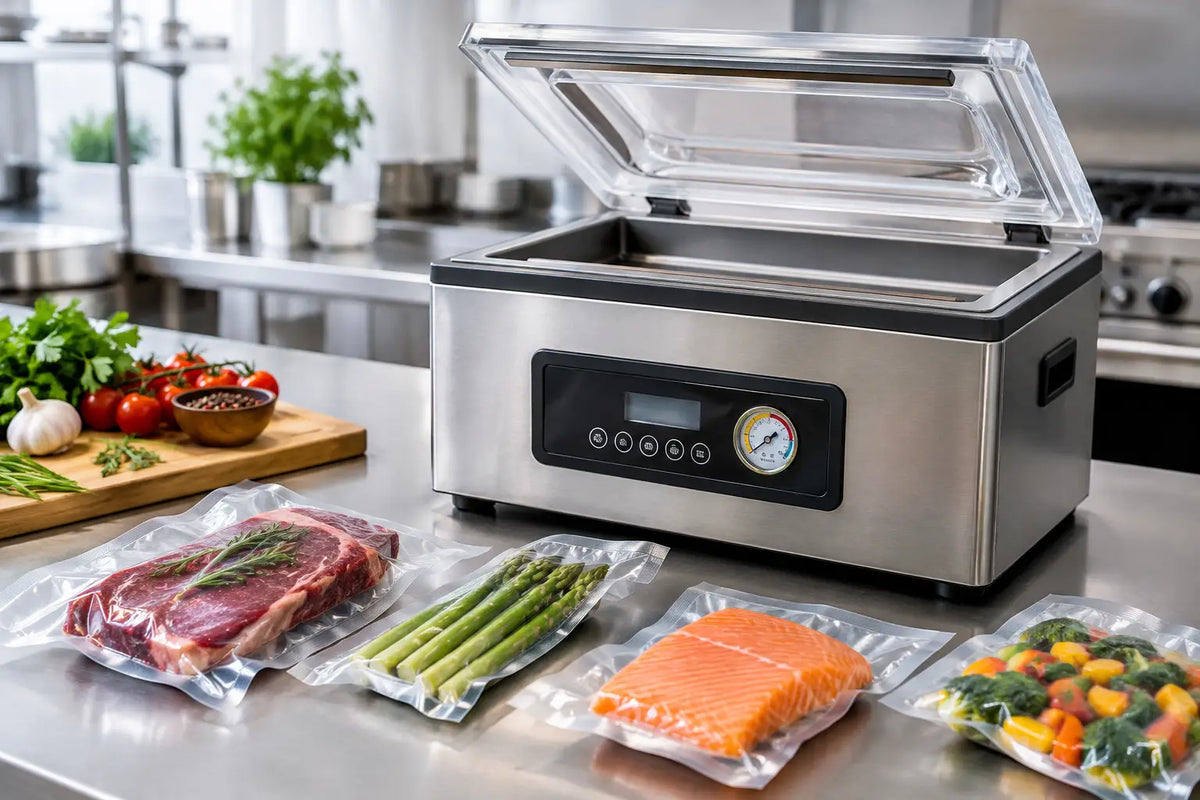
A vacuum sealer that struggles with moist proteins, overheats during prep, or leaves inconsistent seals can create more waste than it prevents. This vacuum packaging machine review focuses on what working restaurants, butcher shops, caterers, and food processors should evaluate before adding a sealer to the production line. The right machine protects product quality, organizes inventory, supports portion control, and helps staff move faster during prep.
What a Commercial Vacuum Sealer Must Deliver
A commercial vacuum packaging machine is not simply a storage accessory. It is a production tool that affects product shelf life, marinade consistency, freezer organization, portioning, and labor. For butcher operations, it can help maintain the appearance and condition of fresh cuts. For restaurants and caterers, it can make batch prep, sous vide production, and transport more controlled.
The strongest machine is not always the largest or most expensive model. It is the model that matches the volume, product type, available workspace, and daily workflow. A small operation sealing dry proteins in limited batches may be well served by an external suction unit. A processor packaging marinated meat, sauces, seafood, or high-volume portions generally needs a chamber vacuum sealer built for wet applications and repeatable cycles.
When comparing machines, look beyond a single claim about suction power. Seal quality, chamber size, pump performance, cycle speed, construction, controls, and service access all determine whether the equipment will hold up in a commercial kitchen.
Vacuum Packaging Machine Review: Chamber vs. External Sealers
The first decision is usually the most consequential: chamber machine or external suction sealer.
Chamber Vacuum Sealers
Chamber vacuum sealers place the entire bag inside a sealed chamber. As the air is removed from the chamber, pressure equalizes inside and outside the bag. This design allows operators to package liquids, marinades, sauces, and moist foods with far less risk of product being pulled into the machine.
For butcher shops, meat processors, BBQ operations, and high-output kitchens, this is often the practical commercial solution. Chamber units can package several portions in one cycle when the chamber is sized appropriately, and they typically use lower-cost smooth vacuum pouches rather than channel bags. Over time, that bag savings can matter for businesses sealing hundreds of packages each week.
The trade-off is footprint and upfront investment. Chamber machines are heavier, need dedicated counter or floor space, and require attention to pump maintenance. A larger chamber also takes more space to evacuate, so buying oversized equipment for modest batches does not automatically improve production speed.
External Suction Sealers
External sealers keep the bag outside the machine and pull air through an open end before sealing it. They are compact, straightforward to operate, and useful where counter space is limited. They are best suited for dry foods, pre-chilled portions, and lighter-volume packaging tasks.
Their limitations become clear with wet products and extended production runs. Liquids can migrate toward the seal area, interrupt the vacuum process, and contaminate the machine. These sealers also commonly require textured or channel bags, which cost more than smooth chamber pouches. For a small cafe or specialty shop, those compromises may be acceptable. For a busy meat department or commissary, they often become a bottleneck.
Seal Quality Matters More Than Maximum Vacuum Claims
A deep vacuum is useful, but it does not compensate for a weak seal. Inspect the sealing system closely. A commercial machine should produce a wide, consistent seal that holds through refrigeration, freezing, transport, and normal handling. Double-seal bars can provide added protection for liquid-rich foods and long-held frozen product, though they also add time to each cycle.
Seal bar length controls the maximum bag width and the number of smaller bags that can be sealed at once. A 12-inch bar may be sufficient for portioned steaks, sausages, cheese, or cooked components. Wider bars make more sense for larger cuts, ribs, bulk proteins, or multiple pouches per cycle. Measure the bags your operation actually uses before selecting a machine.
Also consider adjustable seal time. Thin bags need less heat, while thicker pouches and moisture near the seal area may require more. Precision digital control is valuable because it lets staff repeat successful settings rather than rely on guesswork from one operator to the next.
Pump Performance and Cycle Time
In chamber models, the vacuum pump is the core of the machine. Pump capacity is commonly expressed in cubic meters per hour or liters per minute, but the specification only becomes meaningful when considered with chamber size and workload. A high-capacity pump in a small chamber can produce fast cycles. A smaller pump may be perfectly adequate for periodic packaging but can slow a production crew during peak prep.
Oil-lubricated pumps are widely used in commercial chamber sealers because they can deliver strong vacuum performance and handle demanding production schedules. They do require regular oil checks and changes. Dry pumps reduce that maintenance requirement, but may have different duty-cycle limits and price points. Neither option is automatically better. The right choice depends on how often the machine runs and whether staff will follow a preventive maintenance schedule.
For heavy use, ask how many consecutive cycles the machine can complete without performance loss. A sealer used for two cases of portioned chicken each day has different needs than one supporting a central kitchen, deli counter, or processing room all shift.
Chamber Size, Controls, and Daily Usability
Chamber dimensions should fit the largest item you routinely package, not the occasional oversized item. A deep chamber can accommodate whole racks, large roasts, or containers of marinade. A wide chamber can handle multiple portions at once. Both can improve output, but only if the machine is loaded efficiently.
Digital controls are worth prioritizing in a professional setting. Look for adjustable vacuum time, seal time, cooling time, and the ability to save programs. Programmed cycles help standardize packaging for different products such as fresh beef, cooked pulled pork, marinated chicken, fish, and dry goods. That consistency reduces training time and prevents staff from using excessive heat or insufficient vacuum.
A clear lid also adds practical value. Operators can watch for boil-over in liquid products and stop a cycle before product reaches the seal bar. Soft-air or controlled venting functions can be useful for delicate foods because they reduce the abrupt return of atmospheric pressure at the end of a cycle.
Construction and Maintenance Should Be Part of the Review
Commercial equipment needs to be cleaned, inspected, and kept in service. Stainless steel construction is a strong choice for foodservice environments because it supports routine sanitation and resists the daily wear of prep areas. Check the lid hinges, gasket, seal bar mounting, control panel protection, and feet. These details affect stability and longevity more than cosmetic finish.
Replacement parts matter as well. Gaskets, heating elements, seal tape, lid components, and pump oil are wear items. A machine with accessible service parts is easier to maintain than one that requires extended downtime for basic repairs. Before purchase, establish who on your team will handle daily cleaning, oil inspection, and periodic replacement of consumable components.
Vacuum packaging also requires proper food safety procedures. Removing air can extend quality and help manage storage, but it does not make unsafe food safe or replace time and temperature controls. Refrigerated and frozen products still need to be labeled, dated, stored at proper temperatures, and handled according to your operation's food safety plan.
Matching the Machine to Your Operation
A small restaurant using vacuum packaging for sous vide portions, cheese, and weekly prep may prioritize a compact chamber unit with programmable controls and enough room for standard pouches. A butcher shop should focus on seal-bar width, chamber depth, pump performance, and the ability to package fresh cuts and marinated products without delays.
Caterers often benefit from equipment that handles sauces, prepared meals, and transport-ready portions reliably. BBQ operators may need enough chamber capacity for brisket portions, ribs, pulled meat, and marinated proteins. Processors with continuous packaging demand should place serviceability, pump duty cycle, and cycle speed above small initial price differences.
Hakka Brothers supplies commercial-grade food processing equipment for operators who need practical production capacity, especially across meat handling and preparation workflows. The best purchase decision starts with your actual bag sizes, daily package count, product moisture level, and available workspace.
Choose a vacuum packaging machine that keeps pace with prep instead of creating another station staff have to work around. A properly sized, well-maintained sealer can turn portioning and storage into a controlled, repeatable part of daily production.
Keep exploring
All guides ↗
How to Reduce Prep Bottlenecks in Busy Kitchens
Reduce prep bottlenecks with workflow design, right-sized equipment, cold storage, and station planning that keep commercial kitchens producing daily.
Read the guide
Salad Spinner Not Drying Lettuce? Check Your Batch
Troubleshoot unevenly wet greens with practical loading, drainage and workflow checks, plus a fact-based comparison of Clivia 10 Qt and 20 Qt manual spinners.
Read the guide
Buffet Drink Station Setup: Cups, Clearance and Refills
Plan a buffet drink station around cup clearance, guest flow and refill access, with practical checks for Hakka 3-gallon and 5-gallon dispensers.
Read the guide
Join the conversation